

North Texas GME Research Forum 2026
Files
Download Full Text (1.1 MB)
Division
North Texas
Hospital
Medical City Arlington
Specialty
Internal Medicine
Document Type
Poster
Publication Date
2026
Keywords
cor triatriatu, sinister, CTS, congenital anomaly, medical imaging, anticoagulation
Disciplines
Congenital, Hereditary, and Neonatal Diseases and Abnormalities | Internal Medicine | Medicine and Health Sciences
Abstract
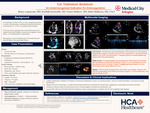
Background: Cor triatriatum (CTS) is a rare congenital heart defect in which a fibromuscular membrane divides the atrium into two chambers, disrupting normal blood flow and potentially leading to circulatory impairment. Accounting for 0.1% to 0.4% of congenital heart diseases, CTS presents variably depending on the degree of left atrial obstruction. Patients may report exertional dyspnea, orthopnea, or palpitations; severe cases can progress to heart failure, pulmonary hypertension, or thromboembolic events. We present the case of a young adult male who developed symptomatic heart failure and atrial fibrillation and was incidentally found to have CTS on imaging.
Case presentation: A 32-year-old male with a history of cocaine use presented with progressive dyspnea at rest and palpitations (NYHA IV). On admission, ECG showed atrial fibrillation (AF) with rapid ventricular response. Transthoracic echocardiography (TTE) demonstrated severe left ventricular systolic dysfunction (EF 15–20%), marked left atrial enlargement, and a fibromuscular membrane within the left atrium. Transesophageal echocardiography (TEE) showed two membrane fenestrations with a hemodynamically significant mean intra-atrial gradient of (~9 mmHg), dense spontaneous echo contrast within the proximal chamber, a small interatrial communication with left-to-right shunting, and a bicuspid aortic valve without significant stenosis or regurgitation (Group 3 Loeffler classification). Coronary CT angiography (CCTA) confirmed the diagnosis and excluded obstructive coronary artery disease. The patient was medically stabilized with diuresis, guideline-directed medical therapy for heart failure (HF), rate and rhythm control for atrial fibrillation, and anticoagulation with apixaban with symptomatic improvement. Definitive surgical or catheter-based membrane resection was recommended in accordance with adult congenital heart disease guidelines; however, due to financial and insurance constraints, the patient elected to defer invasive intervention and continue conservative management with close follow-up.
Lesson-Learned: CTS can present for the first time in adulthood with AF and acute decompensated HF, mimicking primary non-ischemic cardiomyopathy. The presence of large fenestrations does not exclude hemodynamically significant obstruction; physiologic assessment is essential. A fixed intra-atrial pressure gradient may increase left atrial pressure, post-capillary pulmonary hypertension, AF, and secondary ventricular dysfunction, highlighting both upstream-downstream pathophysiologic relationship. Multimodality imaging, including TTE, TEE, CCTA is essential to define membrane morphology, quantify obstruction, and identify associated congenital anomalies. Anticoagulation is a key component of management in adults with CTS and AF, even when traditional CHA₂DS₂-VASc scores are low.
Conclusion: CTS can present as cardiomyopathy in adults, requiring hemodynamic assessment and early anticoagulation.
Original Publisher
HCA Healthcare Graduate Medical Education
Recommended Citation
Lapsiwala, Boney; Kasireddy, Karthik; Mathew, Tenna; and Makkena, Babu, "Cor Triatriatum Sinistrum: An Underrecognized Indication for Anticoagulation" (2026). North Texas GME Research Forum 2026. 61.
https://scholarlycommons.hcahealthcare.com/northtexas2026/61
Included in
Congenital, Hereditary, and Neonatal Diseases and Abnormalities Commons, Internal Medicine Commons