




-
Bilateral Posterior Fracture-Dislocation of the Proximal Humerus After First-Time Seizure
John D. Murphy DO, MBA; Phillip Braunlich DO; and Mohit Bansal MD
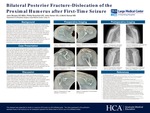
Fractures of the proximal humerus are commonly associated with osteoporosis and comprise 5.7% of all adult fractures [1]. Posterior dislocations of the shoulder comprise 2-5% of all shoulder dislocations, and when bilateral are even more infrequent, occurring less than 5%. [2,3]. Posterior dislocations are often associated with motor vehicle accidents, seizures, or electrical shock [4]. Fracture-dislocations of the proximal humerus occur in only 1% of all shoulder dislocations, thus making posterior fracture-dislocations off the proximal humerus exceedingly rare [5]. In this case report, we present a previously undescribed case presentation and treatment for bilateral posterior fracture-dislocations of the proximal humerus [7,8,9,10,11,12,13,14,15]. The purpose of sharing this case is to describe treatment options for a rarely encountered orthopedic trauma presentation, as there is currently a lack of existing medical literature.
-

Impact of Order Set Use on Stroke Care
Bilal Nadeem MD, Edward Waseleski DO, Meryem Maras-Casey MD, Sabih Alam MD, Adnan Faruqui MD, Michael Gutierrez MD, Maruthsakhi Molugu MD, Christina Oricompil MD, Ashar Mahmood MD, Katherine Torralba MD, Fatima Agha MD, Nour Tlimat MD, Olu Oyesanmi, Irina Davis, Salman Muddassir MD, and Nikolay Mitzov MD
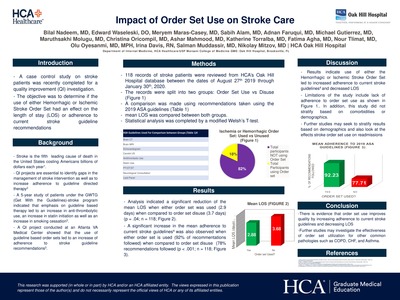
- A case control study on stroke patients was recently completed for a quality improvement (QI) investigation.
- The objective was to determine if the use of either Hemorrhagic or Ischemic Stroke Order Set had an effect on the length of stay (LOS) or adherence to current stroke guideline recommendations
-

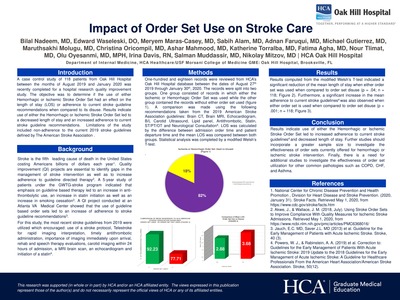
Impact of Order Set Use on Stroke Care
Bilal Nadeem MD, Edward Waseleski DO, Meryem Maras-Casey MD, Sabih Alam MD, Adnan Faruqui MD, Michael Gutierrez MD, Maruthsakhi Molugu MD, Christina Oricompil MD, Ashar Mahmood MD, Katherine Torralba MD, Fatima Agha MD, Nour Tlimat MD, Olu Oyesanmi, Salman Muddassir MD, and Nikolay Mitzov MD
A case control study of 118 patients from Oak Hill Hospital between the months of August 2019 and January 2020 was recently completed for a hospital research quality improvement study. The objective was to determine if the use of either Hemorrhagic or Ischemic Stroke Order Set had an effect on the length of stay (LOS) or adherence to current stroke guideline recommendations when compared to its disuse. Results indicate use of either the Hemorrhagic or Ischemic Stroke Order Set led to a decreased length of stay and an increased adherence to current stroke guideline recommendations. Limitations of the study included non-adherence to the current 2019 stroke guidelines defined by The American Stroke Association .
-
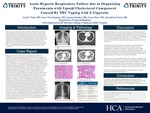
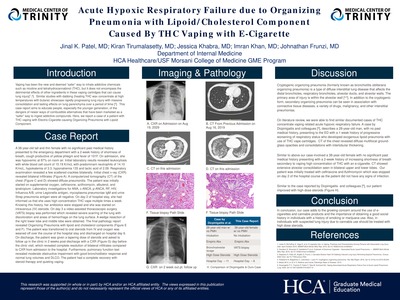
Acute Hypoxic Respiratory Failure Due To Organizing Pneumonia With Lipoid/Cholesterol Component Caused By THC Vaping With E-Cigarette
Jinal K. Patel MD, Kiran Tirumalasetty MD, Jessica Khabra MD, Imran Khan MD, and Johnathan Frunzi MD
Vaping has been the new and deemed “safer” way to inhale addictive chemicals such as nicotine and tetrahydrocannabinol (THC), but it does not encompass the detrimental effects of other ingredients in these vaping cartridges that can cause lung injury[1,2]. Similar studies with dabbing (heating THC wax concentrate at high temperatures with butane) showcase rapidly progressing lung injury with massive consolidation and lasting effects on lung parenchyma over a period of time [3]. This case report aims to educate people, especially the younger generation, of the dangers of newer ways of combustible alternatives that have been marketed as a “safer” way to ingest addictive compounds. Here, we report a case of a patient with THC vaping with Electric-Cigarette causing Organizing Pneumonia with Lipoid Component.
-
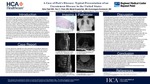
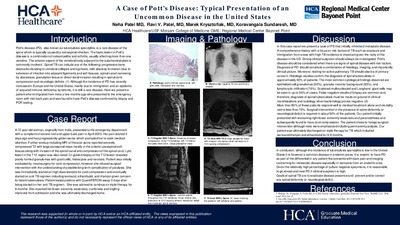
A Case of Pott's Disease: Typical Presentation of an Uncommon Disease in the United States
Neha Patel MD, Ravi Patel MD, Marek Krysztofiak MD, and K V. Sundaresh MD
Pott’s disease (PD), also known as tuberculosis spondylitis, is a rare disease of the spine which is typically caused by extraspinal infection. The basic lesion in Pott's disease is a combination of osteomyelitis and arthritis, usually affecting more than one vertebra. The anterior aspect of the vertebral body adjacent to the subchondral plate is commonly involved. Spinal TB can include any of the following: progressive bone destruction leading to vertebral collapse and kyphosis, cold abscess formation (due to extension of infection into adjacent ligaments and soft tissues), spinal canal narrowing by abscesses, granulation tissue or direct dural invasionresulting in spinal cord compression and neurologic deficits.(1) Although the incidence of PD has recently increased in Europe and the United States, mainly due to immigration and an epidemic of acquired immune deficiency syndrome, it is still a rare disease. Here we present a patient who immigrated from India a few months ago who presented to the emergency room with mid back pain and was found to have Pott’s disease confirmed by biopsy and PCR testing.
-
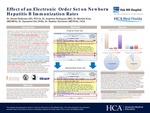
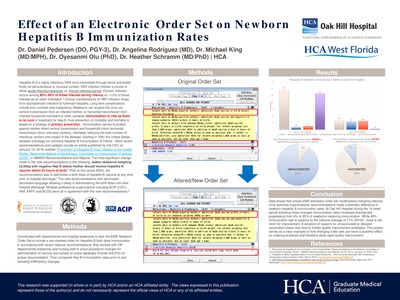
Effect of an Electronic Order Set on Newborn Hepatitis B Immunization Rates
Daniel Pedersen, Angelina Rodriguez, Michael King, and Heather Schramm
-
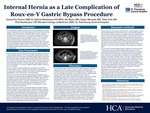
Internal Hernia as a Late Complication of Roux-en-Y Gastric Bypass Procedure
Samantha Purton OMSIII, Gabriel Meshekow DO MPH, My Myers MD, Edgar Mercado MD, and Allan Katz MD
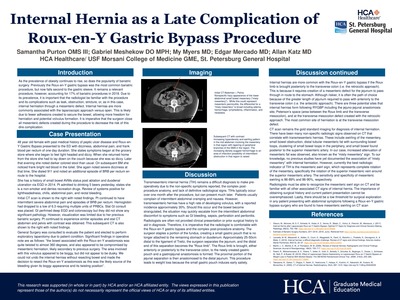
As the prevalence of obesity continues to rise, so does the popularity of bariatric surgery. Previously the Roux-en-Y gastric bypass was the most common bariatric procedure, but now falls second to the gastric sleeve. It remains a relevant procedure, however, accounting for 17% of bariatric procedures in 2018. Due to its prevalence, it is important that the radiologist be familiar with the procedure and its complications such as leak, obstruction, stricture, or, as in this case, internal herniation through a mesenteric defect. Internal hernias are more commonly associated with the laparoscopic approach versus open. This is likely due to fewer adhesions created to secure the bowel, allowing more freedom for herniation and potential volvulus formation. It is imperative that the surgeon close all mesenteric defects created during the procedure to decrease the risk of this dire complication.
-
Giant Splenic Artery Pseudoaneurysm Rupture Presenting as Hemorrhagic Shock
Jaya Sanapati MD, Parth R. Desai MD, Locke W. Barber DO, Johnathan Frunzi, and Timothy Lee MD
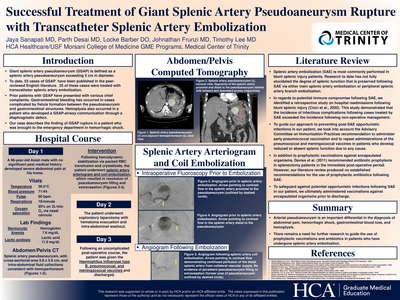
A 56-year-old Asian male was brought to the emergency department by first responders after he developed severe, sudden-onset headache and chest pain at his home. Past medical history was insignificant. On arrival to the emergency department, the patient was in respiratory distress. Vital signs revealed temperature of 36.0°C, blood pressure of 71/44, heart rate of 90 beats per minute, respiratory rate of 18 breaths per minute, and oxygen saturation of 95% with delivery of oxygen at 2 liters per minute via nasal cannula. Examination of the abdomen revealed diffuse tenderness. Laboratory findings and arterial blood gas analysis revealed normocytic anemia (hemoglobin 7.6 mg/dL) and an anion gap metabolic acidosis with low arterial pH (7.260) and elevated lactic acid (11.0 mg/dL).
Computed Tomography (CT) of the abdomen and pelvis revealed a splenic artery pseudoaneurysm, with cross-sectional area of 5.8 x 5.6 cm, and intra-abdominal fluid collections consistent with hemoperitoneum. The patient received transfusion of packed red blood cells and resuscitation with intravenous crystalloids. He subsequently underwent selective splenic artery arteriogram and coil embolization with resolution of pseudoaneurysm filling and extravasation. The following day, exploratory laparotomy with hematoma evacuation and intra-abdominal washout was performed. The patient was given the Haemophilus influenzae type B, pneumococcal, and meningococcal vaccines and discharged.
-
Evolving de Winter Presentation of Acute Myocardial Infarction
Caroline Shepherd and Anthony Furiato
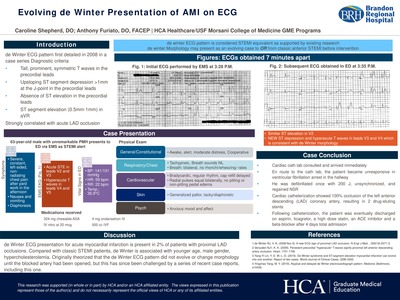
de Winter ECG pattern first detailed in 2008 in a case series Diagnostic criteria
- Tall, prominent, symmetric T waves in the precordial leads
- Upsloping ST segment depression >1mm at the J-point in the precordial leads
- Absence of ST elevation in the precordial leads
- ST segment elevation (0.5mm-1mm) in aVR
Strongly correlated with acute LAD occlusion
-
Progressive Dyspnea after use of Electronic Vaping
Taylor Studsrud, Morgan Zegers, Gary Cook, Narrani Kanapathippillai, and Hilton Alemar-Hernandez
-
A Case Of Babesiosis Seen Outside Of Its Endemic Area And Outside Of Its Incubation Period
Kiran Tirumalasetty MD, Jinal K. Patel MD, Gauthier L. Stepman MD, Bassem Zeidan MD, K V. Sundaresh MD, Parth R. Desai MD, and Johnathan Frunzi MD
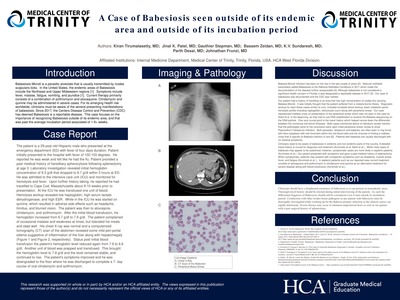
Babesiosis Microti is a parasitic alveolate that is usually transmitted by Ixodes scapularis ticks. In the United States, the endemic areas of Babesiosis include the Northeast and Upper Midwestern regions [1]. Symptoms include fever, malaise, fatigue, vomiting, and jaundice [1]. Current therapy primarily consists of a combination of azithromycin and atovaquone. Clindamycin and quinine may be administered in severe cases. For its emerging health risk worldwide, clinicians must be aware of the several presenting manifestations of babesiosis. Since 2017, the Centers Disease Control and Prevention (CDC) has deemed Babesiosis is a reportable disease. This case focuses on the importance of recognizing Babesiosis outside of its endemic area, and that was past the average incubation period associated of 1-9+ weeks.
-
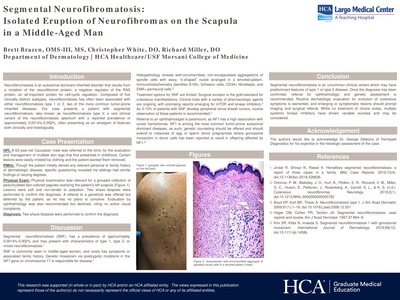
Segmental Neurofibromatosis: Isolated Eruption of Neurofibromas on the Scapula in a Middle-Aged Man
Christopher White DO, Brett Brazen, and Richard Miller DO
-
Malignant Degeneration of Spiradenoma of the Eyebrow
Christopher White DO, Kristin Witfill DO, and Richard Miller DO
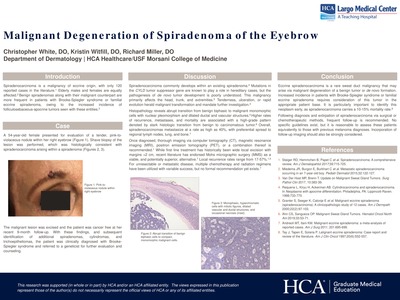
Spiradenocarcinoma is a malignancy of eccrine origin, with only 120 reported cases in the literature.1 Elderly males and females are equally affected.2 Benign spiradenomas along with their malignant counterpart are more frequent in patients with Brooke-Spiegler syndrome or familial eccrine spiradenoma, owing to the increased incidence of folliculosebaceous-apocrine tumors seen with these entities.3
Featuring scholarly activity from HCA Healthcare Graduate Medical Education residents in the West Florida Division.
Printing is not supported at the primary Gallery Thumbnail page. Please first navigate to a specific Image before printing.