

Division
East Florida
Hospital
HCA Florida Westside Hospital
Specialty
Internal Medicine
Document Type
Poster
Publication Date
2025
Keywords
lupus, SLE, tuberculosis, Mycobacterium tuberculosis, acute respiratory distress syndrome
Disciplines
Bacterial Infections and Mycoses | Immune System Diseases | Internal Medicine
Abstract
INTRODUCTION Both lupus and Mycobacterium tuberculosis can affect any organ and can present with non-specific multi-organ involvement. In a patient with lupus, it may be difficult to distinguish between a lupus flare and a mycobacterial infection.
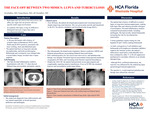
CASE A 28-year-old female with a history of systemic lupus erythematosus (SLE), (anti-Smith and ds-DNA positive), presented with knee swelling, chest and abdominal pain. She had elevated inflammatory markers, hyperkalemia with AKI. CT chest showed bilateral lung micronodules and patchy opacity. The patient had been on long-term steroids, mycophenolate, and hydroxychloroquine. Belimumab and voclosporin were initiated after a recent kidney biopsy revealed class 4 lupus nephritis. She underwent diagnostic knee arthrocentesis and was started empirically on broad-spectrum antibiotics and antifungals. Over 48 hours, the patient developed pancytopenia and worsening hypoxia despite improving renal function. She was given pulse steroids and transferred to the ICU for elective intubation and bronchoalveolar lavage (BAL). She subsequently developed acute respiratory distress syndrome (ARDS) and bilateral pneumothorax necessitating bilateral intercostal drains. BAL returned positive for Mycobacterium tuberculosis, and antituberculosis therapy was initiated. Persistent hypoxia necessitated extracorporeal membrane oxygenation (ECMO), and worsening renal function required hemodialysis. Despite the GM-CSF, the patient had persistent severe pancytopenia and coagulopathy requiring massive transfusions. Even on ECMO she remained hypoxic and succumbed to multi-organ failure.
DISCUSSION The patient had a history of difficult-to-control lupus on long-term immunosuppressants, making both lupus flare and infection possible etiologies of presentation. Elevated inflammatory markers warranted broad antimicrobials, including antifungals. She had recently started belimumab, increasing her risk for mycobacterium reactivation. Although BAL confirmed tuberculosis, the outcome was influenced by the underlying lupus and prolonged immunosuppression. The question is, would empirical antitubercular therapy have altered the outcome? Though current guidelines require testing for only hepatitis B and C before starting belimumab, should we routinely screen for latent mycobacterium infection before starting belimumab?
Original Publisher
HCA Healthcare Graduate Medical Education
Recommended Citation
Swatisikta, Fnu; Kham, Nang; and Chaudhry, Ali, "The Face-Off Between Two Mimics: Lupus and Tuberculosis" (2025). East Florida Division GME Research Day 2025. 36.
https://scholarlycommons.hcahealthcare.com/eastflorida2025/36
Included in
Bacterial Infections and Mycoses Commons, Immune System Diseases Commons, Internal Medicine Commons