
Division
East Florida
Hospital
HCA Florida Aventura Hospital
Specialty
Internal Medicine
Document Type
Poster
Publication Date
2025
Keywords
Pre-emptive transjugular intrahepatic portosystemic, pTIPS, acute-on-chronic liver failure, therapeutic endoscopy
Disciplines
Digestive System Diseases | Internal Medicine
Abstract
Background
Pre-emptive transjugular intrahepatic portosystemic shunt (pTIPS), defined as placement within 72 hours of initial endoscopic therapy for an active variceal bleed, has been proposed as a strategy to reduce rebleeding and improve survival in high-risk patients with cirrhosis. We evaluated outcomes of patients with acute-on-chronic liver failure (ACLF) who presented with variceal bleeding and underwent therapeutic endoscopy (EGD) with or without the addition of pre-emptive TIPS.
Methods
The Nationwide Readmissions Database (2010–2022) was queried for patients with ACLF using previously validated algorithms admitted with variceal upper GI bleeding who received endoscopic intervention. Patients were stratified into two groups: therapeutic EGD with pTIPS and therapeutic EGD alone (band ligation). Primary outcomes were 30- and 90-day unplanned readmissions and readmissions for GI bleeding. Secondary outcomes included readmissions for intracranial hemorrhage (ICH) and blood transfusion. Multivariable hierarchical regression adjusted for demographics and comorbidities was performed, with statistical significance defined as p< 0.05.
Results
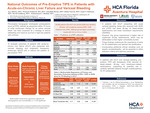
A total of 142,969 patients were identified, of whom 6,963 (4.6%) underwent pre-emptive TIPS in addition to EGD. These patients had a greater comorbidity burden (mean Elixhauser score: 19.3±7.2 vs. 17.2±7.1; p< 0.001). Predictors of pTIPS utilization are shown in Table 1. Compared with EGD alone, EGD plus pTIPS was associated with higher odds of unplanned readmission at 30 days (OR 1.29; p< 0.001) and similar odds at 90 days (OR 1.09; p=0.13). In contrast, patients who underwent EGD plus pTIPS had significantly lower odds of GI bleed-related readmission at 30 days (OR 0.55; p< 0.001) and 90 days (OR 0.46; p< 0.001). Secondary analyses showed reduced transfusion-related readmissions at 90 days (OR 0.71; p< 0.001) and similar odds at 30 days (OR:0.88; p=0.29).
Conclusion
In patients with ACLF presenting with variceal bleeding, therapeutic EGD combined with pTIPS (within 72 hours of index endoscopy) was associated with fewer GI bleed-related readmissions and lower transfusion requirements, but at the cost of higher 30-day unplanned readmission. These findings highlight the importance of early GI–IR collaboration in selecting ACLF patients who may derive the greatest benefit from the addition of pTIPS to standard endoscopic therapy. Incorporating additional clinical variables such as hepatic encephalopathy will be essential to refine selection criteria and optimize outcomes.
Original Publisher
HCA Healthcare Graduate Medical Education
Recommended Citation
Akhras, Aya; Wahood, Waseem; Beran, Azizullah; Sawaf, Bisher; Ur Rahman, Asad; Goldberg, David; and Shahid, Muhammed U., "National Outcomes of Pre-Emptive TIPS in Patients with Acute-on-Chronic Liver Failure and Variceal Bleeding" (2025). East Florida Division GME Research Day 2025. 42.
https://scholarlycommons.hcahealthcare.com/eastflorida2025/42