


North Texas GME Research Forum 2026
Files
Download Full Text (504 KB)
Division
North Texas
Hospital
Medical City Arlington
Specialty
Internal Medicine
Document Type
Poster
Publication Date
2026
Keywords
acute interstitial nephritis, AIN, acute kidney injury, AKI, drug-induced AIN, drug-induced acute interstitial nephritis
Disciplines
Internal Medicine | Male Urogenital Diseases | Medicine and Health Sciences
Abstract
Background: Acute interstitial nephritis (AIN) is an important but often underrecognized cause of acute kidney injury (AKI), accounting for 2–5% of all kidney biopsies and up to 20% of biopsies performed for AKI. Drug-induced AIN is the most common etiology in developed countries, frequently associated with antibiotics, nonsteroidal anti-inflammatory drugs, and proton pump inhibitors. Classic hypersensitivity features are frequently absent, leading to delayed diagnosis and increased risk of dialysis dependence.
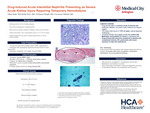
Case Presentation: A 74-year-old male with a history of prostate cancer, type 2 diabetes mellitus, and hypertension presented with progressive exertional dyspnea and was found to have severe AKI without prior chronic kidney disease. Admission laboratory evaluation revealed creatinine 5.51 mg/dL, thrombocytopenia, and hyponatremia. Imaging showed no evidence of obstructive uropathy. Urinalysis demonstrated significant pyuria with white blood cell casts and elevated urine sodium, suggesting intrinsic renal injury. Etiology of AKI was suspected to be volume overload. Despite supportive management and diuresis, renal function worsened with creatinine increasing to 7.0 mg/dL and declining urine output, necessitating initiation of intermittent hemodialysis. Subsequent urine studies revealed eosinophiluria. Detailed medication reconciliation identified recent exposure to amoxicillin-clavulanate prior to admission. High-dose intravenous corticosteroids were initiated, followed by an oral prednisone taper. Kidney biopsy later confirmed inflammatory interstitial infiltrates consistent with AIN. Renal function gradually improved, dialysis was discontinued, and creatinine returned near baseline by hospital day eight.
Lessons Learned: This case illustrates the broad differential diagnosis of AKI and emphasizes the importance of early consideration of drug-induced AIN, even in the absence of classic hypersensitivity findings. Thorough medication review, timely nephrology consultation, and appropriate diagnostic evaluation are critical. While a subset of patients with AIN require temporary dialysis, early recognition and prompt corticosteroid therapy can result in renal recovery and avoidance of permanent dialysis.
Conclusion: Drug-induced AIN is a reversible cause of severe AKI that requires a high index of suspicion. Early identification and treatment are essential to improve renal outcomes, particularly in older patients with recent antibiotic exposure.
Original Publisher
HCA Healthcare Graduate Medical Education
Recommended Citation
Raju, Nihar; Nair, Rohit; Singh, Vaishnavi; and Vibhuti, Veeranna, "Drug-Induced Acute Interstitial Nephritis Presenting as Severe Acute Kidney Injury Requiring Temporary Hemodialysis" (2026). North Texas GME Research Forum 2026. 15.
https://scholarlycommons.hcahealthcare.com/northtexas2026/15