


North Texas GME Research Forum 2026
Files
Download Full Text (734 KB)
Division
North Texas
Hospital
Medical City Fort Worth
Specialty
Internal Medicine
Document Type
Poster
Publication Date
2026
Keywords
hypertrophic obstructive cardiomyopathy, HOCM, anomalous origin of the right coronary artery, RCA, sudden cardiac death, trans-aortic septal myectomy
Disciplines
Cardiology | Cardiovascular Diseases | Internal Medicine | Medicine and Health Sciences
Abstract
Introduction: Hypertrophic obstructive cardiomyopathy (HOCM) and anomalous origin of the right coronary artery (RCA) are well-known but rare congenital heart diseases that are recognized as independent leading causes of sudden cardiac death(SCD). The independent prevalence of both these conditions is less than 1%. The co-occurrence of these two conditions is seldom ever reported in the literature. We present an extremely rare case of HOCM and the anomalous origin of the RCA in the same individual.
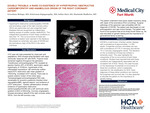
Background: A 67-year-old male with no significant past medical history presented for chest pain and palpitations. EKG showed atrial fibrillation with rapid ventricular response. Troponin level remained negative throughout the admission. Transthoracic echocardiography(TTE) revealed an ejection fraction (EF) of 55-60%, asymmetric septal hypertrophy of 18.92mm, hypokinesis of the inferoseptal myocardium, left ventricular outflow tract(LVOT) obstruction with mean gradient of 145mmHg, increased LVOT velocity. Transesophageal echocardiography(TEE) was remarkable for eccentric posteriorly directed mitral regurgitation(MR), sigmoid septum, and evidence of LVOT obstruction. Coronary computed tomography angiography (CCTA) showed anomalous origin of the right coronary artery, arising from the sinotubular junction of the aorta distal to the left coronary sinus located slightly superior and anterior to the origin of left main coronary artery. Cardiac MRI was remarkable for asymmetric septal hypertrophic cardiomyopathy. Additionally, systolic anterior motion of the mitral valve leaflet suggesting obstructive component was noted on the cardiac MRI. The patient underwent cardiac catheterization, which showed evidence of hypertrophic obstructive cardiomyopathy(HOCM) with a left ventricular aortic gradient of 90mmHg. Coronary angiography showed anomalous takeoff of the right coronary artery(RCA) from the left coronary cusp. The patient underwent trans-aortic septal myectomy along with repair of the anomalous RCA(unroofing). Surgical pathology of the specimen was compatible with the diagnosis of HOCM. The patient was later discharged on oral anticoagulation and rate control therapy. The patient was found to be symptom-free at his three-month follow-up. He was educated on genetic testing and the importance of generational family screening.
Conclusion: HOCM is a well-known inherited cardiac disease with a prevalence of approximately 1 in 500 adults. Congenital coronary anomalies are rare, with a prevalence of 0.3% in necropsy and almost 1% in coronary angiographic series. The literature on the co-existence of these two entities is extremely scant. This case highlights the uniqueness of the co-occurrence of both these conditions. Studies have reported that both these conditions are independently associated with an increased risk of SCD. Hence, this case focuses on the awareness of potential co-occurrence of these two conditions, which is especially important for risk stratification for SCD. Early diagnosis of these lethal conditions can improve the prognosis and survival rate. It is also essential to educate the patient on the importance of genetic testing.
Original Publisher
HCA Healthcare Graduate Medical Education
Recommended Citation
Molugu, Greeshma; Rajaganapathy, Srinivasan; Haci, Seline; and Madhrira, Machaiah, "Double Trouble: A Rare Co-Existence of Hypertrophic Obstructive Cardiomyopathy and Anomalous Origin of the Right Coronary Artery" (2026). North Texas GME Research Forum 2026. 72.
https://scholarlycommons.hcahealthcare.com/northtexas2026/72