


North Texas GME Research Forum 2026
Files
Download Full Text (508 KB)
Division
North Texas
Hospital
Medical City Fort Worth
Specialty
Internal Medicine
Document Type
Poster
Publication Date
2026
Keywords
cocaine, cardiotoxicity, papillary muscle rupture, cocaine toxicity
Disciplines
Cardiology | Cardiovascular Diseases | Internal Medicine | Medicine and Health Sciences
Abstract
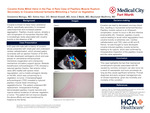
Background: Cocaine is known to have many cardiotoxic effects, specifically secondary to increased sympathetic output from the increased catecholamines, calcium modulation, and increased platelet aggregation. This can cumulatively cause suppression of myocardial contractility and decreased coronary blood flow, resulting in arrhythmias, myocardial ischemia, or even infarction. Papillary muscle rupture, already a rare complication of myocardial infarction (MI), is exceedingly rarely associated with cocaine toxicity in the absence of MI. Also, acute mitral regurgitation(MR) due to papillary muscle rupture from cocaine-induced ischemia remains exceedingly rare. We present a second-ever reported case of papillary muscle rupture secondary to cocaine-induced ischemia in the absence of MI.
Case Description: A 62-year-old male with a past medical history of cocaine abuse who presented with chest pain, underwent a left heart catheterization, which showed patent coronary arteries with an ejection fraction (EF) of 50-55%. He later developed cardiogenic shock with flash pulmonary edema requiring intubation and was placed on VA ECMO and an Impella 5.5. Bedside transthoracic echocardiogram (TTE) showed a reduced EF, flail anterior mitral valve (MV) leaflet with severe MR and a mobile echogenic density on the MV which was concerning for a vegetation vs tumor. He was started on broad-spectrum antibiotics due to suspicion of infective endocarditis(IE). A transesophageal echocardiogram (TEE) revealed a ruptured papillary muscle head mimicking a vegetation/tumor. The patient underwent MV replacement. Intraoperative findings demonstrated papillary muscle necrosis and rupture without evidence of valvular vegetation or tumor. Of note the patient did not improve despite the above efforts; echo done 2 days later showed EF 10-15%. The prognosis was explained to the family, and they transitioned the patient to hospice.
Conclusion / Discussion: Papillary muscle rupture is a very rare complication, known to occur in MI and IE. However, papillary muscle rupture leading to acute severe MR from cocaine toxicity is extremely rare. Cardiac catheterization and TEE ruled out MI and IE in our patient. Hence, he was thought to have developed cocaine-induced papillary muscle ischemia leading to its rupture. This was confirmed by intraoperative inspection of the papillary muscle and the valve apparatus (Pathologic examination of the resected papillary muscle showed atherosclerotic changes in small arteries and infarcted areas in different post infarct time phases along the ruptured edge). This case highlights the fact that mechanical complications typically associated with myocardial infarctions caused by coronary occlusions can also occur from a result of vasospastic and toxic processes as long as they cause significant ischemia. Prompt diagnosis and early surgical management is of utmost importance given the morbidity and mortality of the condition.
Original Publisher
HCA Healthcare Graduate Medical Education
Recommended Citation
Molugu, Greeshma; Haci, Seline; Khalafi, Mehdi; Malik, Amir Z.; and Madhrira, Machaiah, "Cocaine Kicks Mitral Valve in the Pap- A Rare Case of Papillary Muscle Rupture Secondary to Cocaine-Induced Ischemia Mimicking a Tumor vs Vegetation" (2026). North Texas GME Research Forum 2026. 19.
https://scholarlycommons.hcahealthcare.com/northtexas2026/19