

North Texas GME Research Forum 2026
Files
Download Full Text (321 KB)
Division
North Texas
Hospital
Medical City Fort Worth
Specialty
Family Medicine
Document Type
Poster
Publication Date
2026
Keywords
graduate medical education, prescribing errors, medication errors, internship and residency
Disciplines
Family Medicine | Medical Education | Medicine and Health Sciences
Abstract
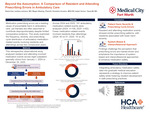
BACKGROUND: Medication prescribing errors remain a leading cause of preventable patient harm in ambulatory care. This study examined whether the severity, frequency, and distribution of medication prescribing errors differ between residents and attendings in outpatient settings to inform graduate medical education (GME) and system-level medication safety strategies.
METHODS: This retrospective observational study was conducted across a multi-specialty ambulatory care network. Ambulatory medication-related events involving residents and attendings occurring between January 1 and December 31, 2025, were identified through voluntary reporting in a cloud-based risk management system. Events were categorized by prescriber role and classified using the National Coordinating Council for Medication Error Reporting and Prevention (NCC MERP) patient harm index and by stage of the medication prescribing cycle. Event frequency, patient harm severity, and distribution across prescribing cycle stages were compared using descriptive statistics and Fisher’s exact test.
RESULTS: A total of 83 ambulatory medication-related events were analyzed, involving attendings (35) and residents (19), with other events involving staff and other clinical operational factors. Most events in both groups reached the patient without harm (Category C). Among attending-involved events, 16.7% required monitoring or intervention (Category D) and 2.8% resulted in temporary harm (Category E), compared with 5.3% of resident-involved events requiring monitoring (Category D) and no resident-associated harm (Categories E–I). Overall, events requiring monitoring or harm (Category D or higher) were more frequent among attending-involved events (19.4% vs 5.3%), with no severe or permanent harm observed. No events in either group resulted in severe harm or death (Categories F–I). Medication-related events occurred across all phases of the prescribing cycle, most frequently during scheduling, documenting, prescribing, and transcribing, with similar clustering across clinician roles.
CONCLUSIONS: Resident and attending-involved ambulatory medication events demonstrated comparable harm profiles and similar distributions across prescribing cycle phases, with no severe or permanent patient harm identified. These findings challenge the perception that prescribing errors are primarily trainee-driven and underscore the importance of system-level and interprofessional medication safety interventions in ambulatory care. Integrating medication safety education with workflow-focused improvements may enhance patient safety while advancing GME across all levels of clinical training.
Original Publisher
HCA Healthcare Graduate Medical Education
Recommended Citation
Lambert-Johnson, Shana-Kay; Wesling, Megan; Houston, Keneisha; Vecino, Isabel; and Mir, Tasaduq, "Beyond the Assumption: A Comparison of Resident and Attending Prescribing Errors in Ambulatory Care" (2026). North Texas GME Research Forum 2026. 2.
https://scholarlycommons.hcahealthcare.com/northtexas2026/2