


North Texas GME Research Forum 2026
Files
Download Full Text (824 KB)
Division
North Texas
Hospital
Medical City Denton
Document Type
Poster
Publication Date
2026
Keywords
immunosuppressant, postoperative infection, wound complications, ankle fracture, open reduction and internal fixation, ORIF
Disciplines
Medicine and Health Sciences | Orthopedics | Surgical Procedures, Operative
Abstract
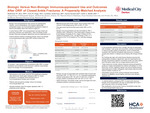
Background: The effect of biologic immunosuppressant therapy on postoperative outcomes following ankle fracture open reduction and internal fixation (ORIF) remains unclear, and concerns regarding infection and impaired healing often influence perioperative decision-making. We hypothesized that biologic immunosuppressant use would be associated with higher rates of postoperative complications following ORIF of closed ankle fractures compared with non-biologic immunosuppressant therapy.
Methods: We conducted a retrospective cohort study using a multi-hospital administrative dataset (2017-2025) to identify adult patients undergoing ORIF for closed bimalleolar or trimalleolar ankle fractures who were prescribed immunosuppressive therapy. Patients were categorized based on biologic versus non-biologic immunosuppressant use. A 1:2 propensity score match was performed based on age, sex, smoking status, insurance type, and diabetes. Outcomes included acute care encounters (ACE) within 1 year (defined as emergency department encounters or hospital admission), postoperative medical complications, and fracturerelated complications. Firth logistic regression was used for adjusted analyses.
Results: After matching, 350 patients were included (biologic, n=120; non-biologic, n=230), with balanced baseline characteristics. One-year acute care encounter rates were similar (58% biologic vs 57% non-biologic, P=.87). Rates of thromboembolic events, surgical site infection, wound complications, malunion, nonunion, delayed union, and revision surgery were low and comparable between groups. In adjusted analyses, biologic immunosuppressant use was not associated with significantly increased odds of ACE (OR 1.27, 95% CI 0.77– 2.12; P=.40), composite postoperative medical complications (OR 1.68, 95% CI 0.89–3.32; P=.12), or fracture-/surgery-related complications (OR 0.68, 95% CI 0.22–1.84; P=.50). Across all models, higher comorbidity burden, as measured by the Elixhauser Comorbidity Index, was the strongest and most consistent predictor of adverse outcomes.
Conclusion: Biologic immunosuppressant use was not associated with increased postoperative risk following ORIF of closed ankle fractures compared with non-biologic immunosuppressant therapy. Overall comorbidity burden, rather than immunosuppressant class, appears to drive postoperative outcomes. These findings support perioperative risk stratification based on global health status rather than medication class alone.
Original Publisher
HCA Healthcare Graduate Medical Education
Recommended Citation
Box, McKenna W.; Puga, Troy B.; Anderson, Lachlan; Kozlowski, Alyssa; and Riehl, John T., "Biologic Versus Non-Biologic Immunosuppressant Use and Outcomes After ORIF of Closed Ankle Fractures: A Propensity-Matched Analysis" (2026). North Texas GME Research Forum 2026. 66.
https://scholarlycommons.hcahealthcare.com/northtexas2026/66