


North Texas GME Research Forum 2026
Files
Download Full Text (2.4 MB)
Division
North Texas
Hospital
Medical City Plano
Specialty
Transitional Year
Document Type
Poster
Publication Date
2026
Keywords
toxic epidermal necrolysis, Stevens-Johnson Syndrome, SJS, cutaneous drug reactions, CADR
Disciplines
Immune System Diseases | Internal Medicine | Medicine and Health Sciences | Skin and Connective Tissue Diseases
Abstract
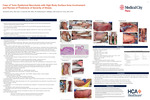
BACKGROUND: Stevens-Johnson Syndrome (SJS) and Toxic Epidermal Necrolysis (TEN) are rare and potentially fatal cutaneous adverse drug reactions. The most common mortality predictor used for TEN is the SCORTEN (Severity-of-Illness Score for Toxic Epidermal Necrolysis). Various scoring systems have been used and are being developed for predicting mortality and guiding treatment in SJS/TEN. We describe a case of TEN with a high body surface area involvement and discuss the scoring predictors for severity of illness.
CASE PRESENTATION: A 63-year-old male was transferred to our burn center for a suspected diagnosis of SJS/TEN. He was intubated prior to arrival. He had a recent hospitalization within the past month and underwent a toe amputation. In the prior week he developed a diffuse generalized rash which started sloughing, and he was brought into an outside hospital. On exam, heart rate was tachycardic. There was conjunctival injection with crusting at eyelids and nasal and oral mucosal erosions. There was diffuse erythema on the face with erosions and hemorrhagic crusts on the face and lips. Dusky red/purpuric macules and patches with wrinkled detached centers were overlying the lower extremities and the majority of the torso and upper extremities with flaccid vesicles and bullae throughout. Desquamation was found throughout with denuded erosions and adjacent epidermal detachment with peeling. Over 90% of body surface area was involved. Nikolsky’s sign was positive. Skin punch biopsies confirmed the diagnosis of TEN. SCORTEN score was 5. The patient was admitted to the burn unit and started on intravenous immunoglobulin. Despite ongoing treatment and supportive care, after 20 days the patient was transferred to inpatient hospice care due to worsening status, with death resulting on day 24 after initial hospital admission.
LESSONS LEARNED: This case highlights a case of Toxic Epidermal Necrolysis with especially high body surface area involvement. SCORTEN is more reliable in predicting mortality when scores are high. SCORTEN has been shown to be more reliable than ABCD-10 (Age, bicarbonate, cancer, dialysis, 10% body surface area risk model) in predicting mortality. Clinical Risk Score for TEN (CRISTEN) can also be used for predicting mortality with clinical information. Re-SCORTEN may increase predictiveness of mortality.
CONCLUSION: Understanding the various severity-of-illness scores for SJS/TEN will help dermatologists and providers in burn centers understand how these scoring systems can predict mortality and guide treatment.
Original Publisher
HCA Healthcare Graduate Medical Education
Recommended Citation
Riva, Hannah R.; Cockerell, Clay J.; Siddique, Muhammad T.; and Cross, James M., "Case of Toxic Epidermal Necrolysis with High Body Surface Area Involvement and Review of Predictors of Severity of Illness" (2026). North Texas GME Research Forum 2026. 32.
https://scholarlycommons.hcahealthcare.com/northtexas2026/32
Included in
Immune System Diseases Commons, Internal Medicine Commons, Skin and Connective Tissue Diseases Commons