


North Texas GME Research Forum 2026
Files
Download Full Text (282 KB)
Division
North Texas
Hospital
Medical City Arlington
Specialty
Emergency Medicine
Document Type
Poster
Publication Date
2026
Keywords
ST-elevation myocardial infarction, STEMI, door-to-balloon time, mortality, emergency services personnel, cath lab
Disciplines
Cardiovascular Diseases | Emergency Medicine | Medicine and Health Sciences
Abstract
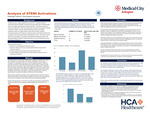
Background Prior studies of ST-segment elevation myocardial infarctions (STEMI) presentations have shown that longer door-to-balloon (D2B) times are associated with increased mortality. Percutaneous Coronary Intervention (PCI) within 90-minutes is standard. It appears that STEMI patients without prehospital notifications have longer ischemic times. Prehospital activation of cathlab involves EKG transmission that the Emergency Physician interprets before activating cathlab, which has the potential to cause delays. We propose that prehospital notification and prehospital having the ability to activate cathlab could decrease D2B times.
Study aims:
- Evaluate current prehospital notification system.
- Assess EMS accuracy in STEMI identification and cathlab activation.
- Does prehospital notification decrease D2B times?
- Provide QI education to EMS providers.
Methods All STEMI and prehospital notifications at Medical City North Hills were enrolled prospectively in our study as part of CV services and EMS QI. Cases were reviewed monthly, and metrics were recorded. At study onset, several EMS departments had the ability to activate cathlab via “Live-Process,” but this was discontinued. Prehospital cathlab activation during the study period was more improvised. During the study, a new platform, PULSARA, was implemented, that can send updates in real-time and includes a STEMI alert function.
Results From 1/1/2025 - 12/31/2025, there were 50 STEMI activations. 6 were deactivated by cardiology, 2 had no occlusion, and 2 expired. Of the 40 cases with intervention, the average D2B time was 74 minutes. 26 arrived by EMS; 21 received interventions with an average D2B time of 55 minutes. EMS activated cathlab 22 times; with 17 interventions with an average D2B time of 42 minutes. 4 cases arrived by EMS without prehospital activation with average D2B time of 113 minutes. 24 activations walked in resulting in 19 interventions with an average D2B time of 76 minutes. Overall, there were 34 STEMI alerts sent via PULSARA, 13 of which did not meet STEMI criteria, and cathlab wasn’t activated. Conclusion The shortest D2B times were prehospital activation by EMS, and the longest were those arriving by EMS without prehospital activation. The N for this last group was small and may not be statistically significant, but clinically it was. Of the STEMI alerts sent via PULSARA for cathlab activation, 38% were incorrectly identified. It is likely that some of these alerts were due to concerning EKGs. Going forward, we plan to use the PULSARA system to activate cathlab and will provide education to our EMS partners.
Original Publisher
HCA Healthcare Graduate Medical Education
Recommended Citation
Wilson, Ashleigh and Houston, Christopher, "Analysis of STEMI Activations" (2026). North Texas GME Research Forum 2026. 55.
https://scholarlycommons.hcahealthcare.com/northtexas2026/55