

North Texas GME Research Forum 2026
Files
Download Full Text (249 KB)
Division
North Texas
Hospital
Medical City Fort Worth
Specialty
Family Medicine
Document Type
Poster
Publication Date
2026
Keywords
postpartum depression, PPD, zuranolone, post-natal depression
Disciplines
Family Medicine | Medicine and Health Sciences | Mental Disorders
Abstract
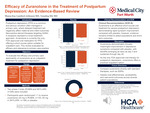
BACKGROUND: Postpartum depression (PPD) is a common and potentially severe condition frequently managed in primary care, where delayed treatment adversely affects maternal and infant outcomes. Neuroactive steroid therapies targeting γ-aminobutyric acid type A receptors represent a novel therapeutic class. Brexanolone, the first FDA-approved treatment for PPD, required prolonged inpatient administration and was withdrawn from the U.S. market in 2025. Zuranolone is currently the only FDA-approved medication specifically indicated for PPD, offering a short-course oral treatment suitable for outpatient use. This review evaluated the efficacy of zuranolone and its applicability in primary care practice.
METHODS: This evidence-based review was conducted in accordance with PRISMA 2020 guidelines. A search was performed using PubMed, from 2021 to January 2026. Search terms “zuranolone,” “postpartum depression”. Eligible studies were randomized, double-blind, placebo-controlled trials enrolling adults with PPD, baseline 17-item Hamilton Depression Rating Scale (HAMD-17) scores. Two phase 3 trials (ROBIN and SKYLARK; n=349) were included. These trials enrolled women aged 18-45 years, ≤6 months postpartum, with severe postpartum depression (HAMD-17 score ≥26) and onset in the third trimester or within 4 weeks postpartum. Participants were randomized 1:1 to receive zuranolone (30 mg in ROBIN, n=153; 50 mg in SKYLARK, n=196) or placebo.
RESULTS: For the primary outcome, both trials demonstrated statistically significant superiority over placebo at day 15, with mean HAMD-17 score reductions favoring zuranolone by −4.2 points in ROBIN (95% CI −6.9 to −1.5; P=0.003) and −4.0 points in SKYLARK (95% CI −6.3 to −1.7; P0.001). Antidepressant effects emerged by day 3 and were sustained through day 45. For secondary outcomes, response rates at day 15 were 72% with zuranolone versus 48% with placebo in ROBIN, and remission rates were 45% versus 23% (number needed to treat of 5 for both). Zuranolone also improved anxiety symptoms (HAM-A) and maternal functioning (Barkin Index). Adverse events were predominantly CNS-related, and were generally mild to moderate.
CONCLUSION: Zuranolone offers rapidly acting, short-course oral treatment for severe postpartum depression and represents a meaningful therapeutic advance for primary care. Its use, however, is limited by high cost, variable insurance coverage, restriction to severe PPD populations, controlled substance classification, limited long-term data, and the absence of head-to-head comparisons with selective serotonin reuptake inhibitors or psychotherapy. Further research is needed to clarify comparative effectiveness, cost-effectiveness, patient selection, and long-term outcomes.
Original Publisher
HCA Healthcare Graduate Medical Education
Recommended Citation
Lambert-Johnson, Shana-Kay and Mir, Tasaduq, "Efficacy of Zuranolone in the Treatment of Postpartum Depression: An Evidence-Based Review" (2026). North Texas GME Research Forum 2026. 6.
https://scholarlycommons.hcahealthcare.com/northtexas2026/6