


North Texas GME Research Forum 2026
Files
Download Full Text (264 KB)
Division
North Texas
Hospital
Medical City Fort Worth
Specialty
Family Medicine
Document Type
Poster
Publication Date
2026
Keywords
pain management, opioid epidemic, non-opioid alternatives, analgesia
Disciplines
Anesthesia and Analgesia | Family Medicine | Medicine and Health Sciences
Abstract
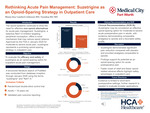
BACKGROUND: The ongoing opioid epidemic underscores the urgent need for effective nonopioid options for acute pain management. Suzetrigine, a selective voltage-gated sodium channel NaV1.8 inhibitor, represents a mechanistically novel analgesic targeting peripheral nociception and may reduce reliance on opioid therapy. It received FDA approval on January 30, 2025, for the treatment of moderate-to-severe acute pain in adults. This evidence-based review evaluates the efficacy and safety of suzetrigine as an opioid-sparing option for outpatient acute pain management.
METHODS: A structured literature search of PubMed was conducted from database inception through January 2026 using the terms “suzetrigine” and “NaV1.8.” Eligible studies were randomized, double-blind, controlled trials enrolling adults (≥18 years) with moderate-to-severe acute pain (numeric pain rating scale ≥4) treated with suzetrigine and reporting validated pain outcomes. Phase 1 pharmacokinetic studies without efficacy endpoints were excluded.
RESULTS: One randomized controlled trial publication met inclusion criteria, reporting outcomes from two phase 3 trials involving patients undergoing abdominoplasty (n=1,118) and bunionectomy (n=1,073). In both trials, suzetrigine administered as a 100-mg loading dose followed by 50 mg every 12 hours produced statistically and clinically significant reductions in pain intensity compared with placebo over 48 hours, measured by the time-weighted sum of pain intensity difference (SPID48). Adjusted mean treatment effects favored suzetrigine by 48.4 points in the abdominoplasty trial (95% CI 33.6–63.1; P< 0.0001) and 29.3 points in the bunionectomy trial (95% CI 14.0–44.6; P=0.0002). Analgesic efficacy was comparable to hydrocodone bitartrate/acetaminophen (5/325 mg every 6 hours), with neither study demonstrating superiority over the opioid comparator for the primary outcome. Suzetrigine demonstrated a faster onset of clinically meaningful pain relief than placebo. Rates of nausea and vomiting were lower with suzetrigine than with opioid therapy, and treatment discontinuation due to adverse events was uncommon (0.6%). No evidence of respiratory depression, sedation, abuse potential, or withdrawal symptoms was observed.
CONCLUSION: Current evidence suggests that suzetrigine provides effective analgesia comparable to opioid therapy for acute postoperative pain, with a more favorable safety and tolerability profile. These findings support its potential role as an opioid-sparing option in outpatient acute pain management. However, available evidence is limited to short-term postoperative settings in relatively healthy adults. Further studies are needed to evaluate its effectiveness in nonsurgical acute pain conditions, broader patient populations, and real-world opioid-sparing outcomes.
Original Publisher
HCA Healthcare Graduate Medical Education
Recommended Citation
Lambert-Johnson, Shana-Kay and Mir, Tasaduq, "Rethinking Acute Pain Management: Evidence for Suzetrigine as an Opioid-Sparing Strategy in Outpatient Care" (2026). North Texas GME Research Forum 2026. 7.
https://scholarlycommons.hcahealthcare.com/northtexas2026/7