
North Texas GME Research Forum 2026
Files
Download Full Text (213 KB)
Division
North Texas
Hospital
Medical City Arlington
Specialty
Emergency Medicine
Document Type
Poster
Publication Date
2026
Keywords
national institution of health stroke scale, NIHSS, neurological deficits, ischemic infarction
Disciplines
Emergency Medicine | Medicine and Health Sciences | Nervous System Diseases
Abstract
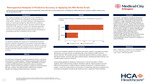
BACKGROUND: The National Institutes of Health Stroke Scale (NIHSS) is widely used to quantify neurologic deficits in acute stroke, yet it is based on observable symptoms rather than ischemic stroke pathophysiology. Because ischemic stroke typically results from focal vascular occlusion, deficits classically localize to a single hemisphere and do not cross the midline. The frequency with which patients presenting with bilateral or contralateral symptoms have MRI-confirmed ischemic infarction, compared with those with unilateral deficits, remains unclear.
METHODS: We performed a retrospective analysis of patients for whom a code stroke was activated at a single institution. Patients presenting with bilateral/contralateral or ipsilateral neurologic deficits were included. Initial NIHSS scores were recorded, and MRI reports were reviewed for evidence of ischemic infarction. Patients receiving tenecteplase or lacking documented NIHSS or MRI were excluded. Associations between NIHSS score, symptom laterality, and imaging-confirmed stroke were examined.
RESULTS: A total of 268 patients met inclusion criteria. The cohort ranged in age from 34 to 85+ years. Of the patient population, 46.6% were male and 53.4% were female. History of a cardiac event was 97%, with 22% of the population identifying as smokers. Patients with contralateral or bilateral deficits were 9.3%, while 43.3% of the population had ipsilateral. Patients were assigned a NIH Stroke Scale Score, with 23.1% with No Stoke (0), 42.9% with Minor Stroke (1-4), 27.6% with Moderate Stroke (5-15), 3% with Moderate to Severe Stroke (16-20), and 3.4% with Severe Stroke (21-42). Ischemic stroke was evaluated on MRI, with 75% positive and 25% negative. The proportion of patients with positive MRI findings did not differ significantly between those with bilateral or contralateral deficits and those with unilateral deficits (72% vs 75%; p>0.7)
CONCLUSION: Although contralateral neurologic findings were less common, most patients with these presentations had MRI-confirmed ischemic stroke. While ischemic stroke typically produces unilateral deficits, contralateral symptoms do not exclude focal infarction. Reliance on symptom laterality or symptom-weighted scales such as the NIHSS may incompletely reflect stroke pathophysiology and should be interpreted alongside neuroimaging. Emergency clinicians should maintain a high index of suspicion and prioritize imaging when stroke is suspected, regardless of deficit laterality.
Original Publisher
HCA Healthcare Graduate Medical Education
Recommended Citation
Hoang, Rachel; Rahimi, Ray; Mofor, Kelly; Meadows, Charley; Shields, Ty; Thayyil, Hibba; Affleck, Hannah A.; Owen, Parker; and Sharma, Sanjay, "Retrospective Analysis of Predictive Accuracy in Applying the NIH Stroke Scale" (2026). North Texas GME Research Forum 2026. 50.
https://scholarlycommons.hcahealthcare.com/northtexas2026/50