


North Texas GME Research Forum 2026
Files
Download Full Text (260 KB)
Division
North Texas
Hospital
Medical City Arlington
Specialty
Emergency Medicine
Document Type
Poster
Publication Date
2026
Keywords
merit-based incentive payment system, MIPS, peritonsillar abscess, parapharyngeal abscess, retropharyngeal abscess
Disciplines
Emergency Medicine | Medicine and Health Sciences | Otorhinolaryngologic Diseases | Respiratory Tract Diseases
Abstract
INTRO
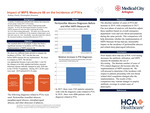
A number of randomized controlled trials indicate that using point-of-care group A strep (POC GAS) testing decreases antibiotic utilization without compromising health outcomes. In 2018, the Merit-based Incentive Payment System (MIPS) measure 66 went into effect requiring the testing for GAS when treating pharyngitis. The intent was to decrease the unnecessary use of antibiotics in the treatment of pharyngitis, given that most cases are viral. Anecdotally, some physicians have noticed the increased incidence of peritonsillar abscesses (PTA). Our research group aims to investigate if there has been a significant increase in incidence of PTAs after the implementation of MIPS measure 66.
METHODS
We chose two different study periods to compare the incidence of PTAs. 2017 was the last year before MIPS measure 66 was implemented. We chose to compare to 2019. We felt this was appropriate because it gave providers 1 year for the changes to be fully adopted and before seasonal infectious disease radically changed in early 2020 due to the COVID 19 pandemic. During 2017, ICD9 codes were used. 2019 utilized ICD 10 codes. The following diagnoses related to PTAs were used: Peritonsillar (tonsillar) abscess, parapharyngeal abscess, retropharyngeal abscess, and other abscesses of pharynx.
RESULTS
We first obtained feasibility data from the enterprise data warehouse. From 1/1/2017 through 12/31/2017, there were 3342 patients enterprise wide with the diagnosis codes related to PTA. From 1/1/2019 - 12/31/2019, there were 4006 patients with a diagnosis related to PTA. This indicated that there are enough patients to proceed to see if there is a statistically significant difference in the incidence before and after the implementation of MIPS measure 66. We plan to normalize the data with respect to the number of patients in the same time periods presenting to the ED with sore throat related chief complaints for final analysis.
CONCLUSION
Prior studies show that use of POC GAS testing decreases the antibiotic utilization, and MIPS measure 66 mandates the use of this testing. The absolute number of cases of PTA related diagnoses did increase after the implementation of MIPS measure 66. We will proceed to determine if the incidence with respect to patients presenting with sore throat related chief complaints changed after the implementation. The results of this comparison may warrant changes in empiric antibiotic coverage in certain cases of pharyngitis.
Original Publisher
HCA Healthcare Graduate Medical Education
Recommended Citation
Finch, Sydney and Houston, Christopher, "Impact of MIPS Measure 66 on the Incidence of PTA's" (2026). North Texas GME Research Forum 2026. 87.
https://scholarlycommons.hcahealthcare.com/northtexas2026/87
Included in
Emergency Medicine Commons, Otorhinolaryngologic Diseases Commons, Respiratory Tract Diseases Commons