

North Texas GME Research Forum 2026
Files
Download Full Text (338 KB)
Division
North Texas
Hospital
Medical City Arlington
Specialty
Internal Medicine
Document Type
Poster
Publication Date
2026
Keywords
Ashwagandha, Withania somnifera, liver injury
Disciplines
Digestive System Diseases | Internal Medicine | Medicine and Health Sciences
Abstract
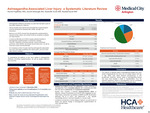
Background: Ashwagandha (Withania somnifera), an herb with origins in Ayurvedic medicine, has recently grown in global popularity due to its reported stress- and anxiety-relieving properties. While generally regarded as safe, emerging cases in medical literature have raised concern for its ability to cause drug- or herb-induced liver injury (DILI/HILI). As use of this supplement rises, it is particularly important to characterize ashwagandha’s potential hepatotoxicity.
Methods: Cases of ashwagandha-induced liver injury were collected by accessing PubMed, Europe PMC, Google Scholar, and the HCA Healthcare Library and searching combinations of the terms “liver” or “hepatic” and one of the following names for the herb: “Withania”, “ashwagandha”, “Indian ginseng”, or “winter cherry”. Each case report or case series was screened to ensure ashwagandha was the likely causative agent of liver injury, and that no other potentially hepatotoxic supplement was being taken by the patients.
Results: Thirty-seven cases were identified from literature review. The patients had an average age (SD, range) of 41 (16, 19-75) and a male:female ratio of 22:15. Seventy-eight percent of patients presented with jaundice and 51% with pruritis, and approximately 30% with nausea/vomiting, fatigue/malaise, or abdominal pain. Peak values of pertinent labwork revealed an average peak AST of 377 (521, 47-2500), average peak ALT 562 (846, 34-3692), average peak ALP 251 (159, 59-893), average peak total bilirubin 14.3 (8.4, 2-31.5), and average peak INR of 1.7 (1.5, 0.9-6.2). The type of liver injury was 49% hepatocellular, 24% mixed, 19% cholestatic, and 8% unable to be calculated due to missing labwork. Three reported cases resulted in death, 1 required transplantation, and the rest either resolved spontaneously or with steroids, ursodeoxycholic acid, cholestyramine, hydroxyzine, or N-acetylcysteine.
Conclusion: The majority of reported cases of ashwagandha-related liver injury reveal a hepatocellular liver injury with no notable relation with sex or age. While most cases resolved spontaneously or with symptomatic treatment, several cases of ashwagandha-induced liver injury have resulted in death or transplantation; thus, the potential hepatotoxic effects of ashwagandha must be considered when evaluating cases of supplement-induced liver injury.
Original Publisher
HCA Healthcare Graduate Medical Education
Recommended Citation
Teplitsky, David; Sebaugh, Jacob; Ford, Danielle; and Syed, Rashid, "Ashwagandha-Associated Liver Injury: A Systematic Literature Review" (2026). North Texas GME Research Forum 2026. 34.
https://scholarlycommons.hcahealthcare.com/northtexas2026/34